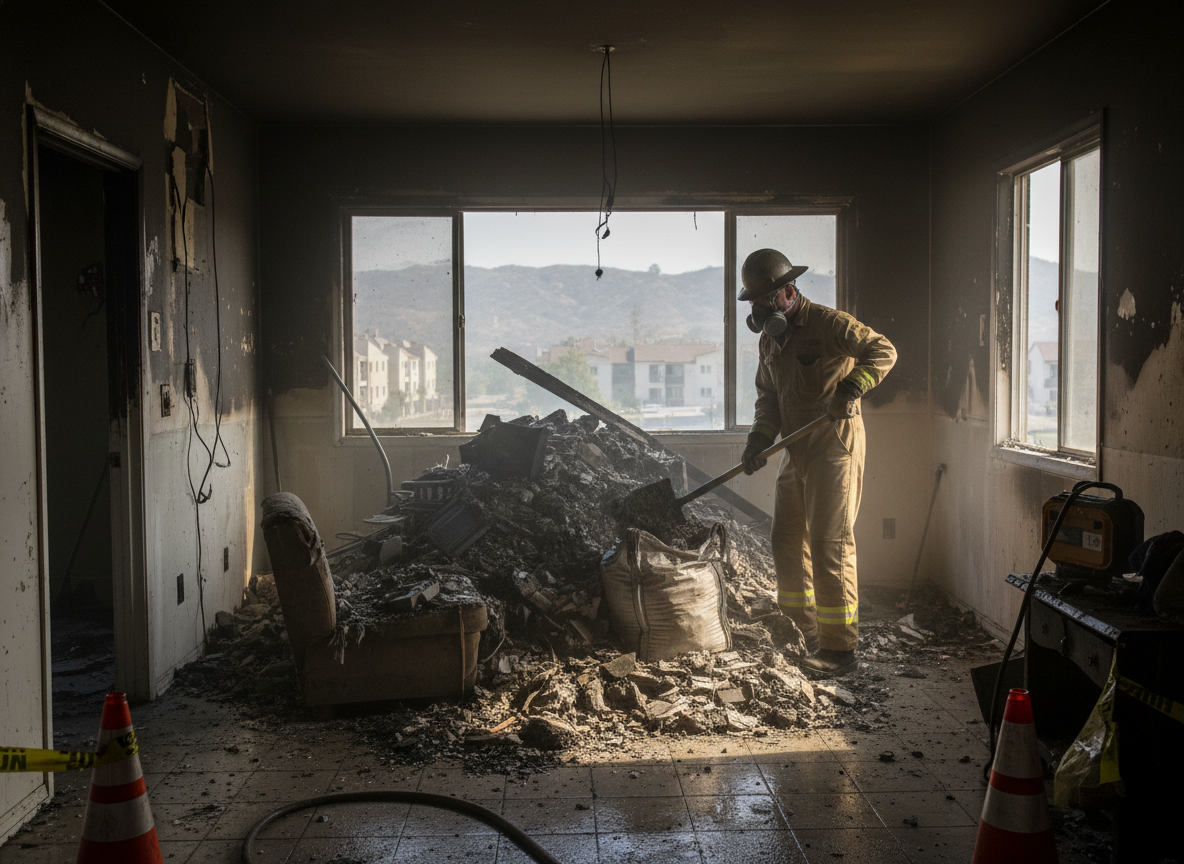
Apartment fires in Sun Valley often involve older wood-frame buildings common throughout Los Angeles County neighborhoods like Shadow Hills and La Tuna Canyon. Smoke travels quickly through shared walls, HVAC systems, and attics, leaving acidic soot on drywall, insulation, and personal contents. Hot dry summers increase the risk of rapid fire spread and make ventilation challenging during cleanup. Technicians must test for hidden charring behind cabinets and in ceiling cavities while following county guidelines on disposal of contaminated materials. Residue from synthetic furnishings requires specialized neutralizers to prevent ongoing odor and corrosion on metal fixtures.
Cleanup crews working near Hansen Dam Recreation Area or Sunland Boulevard frequently encounter properties with limited access points and tight parking. This forces careful staging of equipment to avoid disturbing neighbors in adjacent units. Water used during suppression can pool in slab foundations common in Pacoima and Burbank border apartments, leading to secondary mold if not extracted promptly. Every job includes documenting pre-existing wear in aging units so owners understand what the fire actually caused versus normal deterioration. Proper HEPA filtration and negative air machines keep particulates from migrating into unaffected apartments during the process.
Residents in Sun Valley apartments face unique challenges when fires start in one unit and affect multiple floors through stairwells or laundry chutes. Soot embeds in textured ceilings and carpet padding, requiring removal rather than simple wiping. Crews check electrical boxes and outlets for carbon tracking that could create future hazards. All debris is bagged and removed according to local waste rules to prevent recontamination. Final clearance involves odor testing with equipment rather than relying on scent alone, especially after summer heat accelerates off-gassing from charred materials.
Technician insight
In Sun Valley the thing that catches most people out with Apartment fire cleanup is how quickly smoke moves through the single-wall construction in 1950s and 1960s apartments near Sun Valley Park, especially when summer heat pulls it upward into units that never saw flame.
Smoke migration in a two-story apartment
A kitchen fire on the ground floor spread soot through an open stairwell into the upstairs unit. Inspection showed residue inside the shared HVAC trunk and behind baseboards. Crews isolated the systems, removed contaminated insulation, and treated all surfaces before clearing the air. Both units passed final testing and were returned to the owner within the expected timeframe.
How it works
- 1
Initial Assessment
Inspect all affected units for smoke paths, structural damage, and hidden residue while documenting conditions in Sun Valley apartments.
- 2
Containment Setup
Seal doorways, vents, and shared walls to stop soot migration into neighboring units during cleaning.
- 3
Soot and Residue Removal
Use HEPA vacuums, sponges, and approved cleaners on surfaces, contents, and HVAC components.
- 4
Odor Neutralization
Apply thermal fogging and ozone treatment where needed, followed by ventilation testing.
- 5
Final Clearance
Conduct air quality checks and walkthrough with the property manager before returning access.
Pricing
Cost depends on number of affected units, soot depth, and HVAC involvement; quotes provided after on-site evaluation.