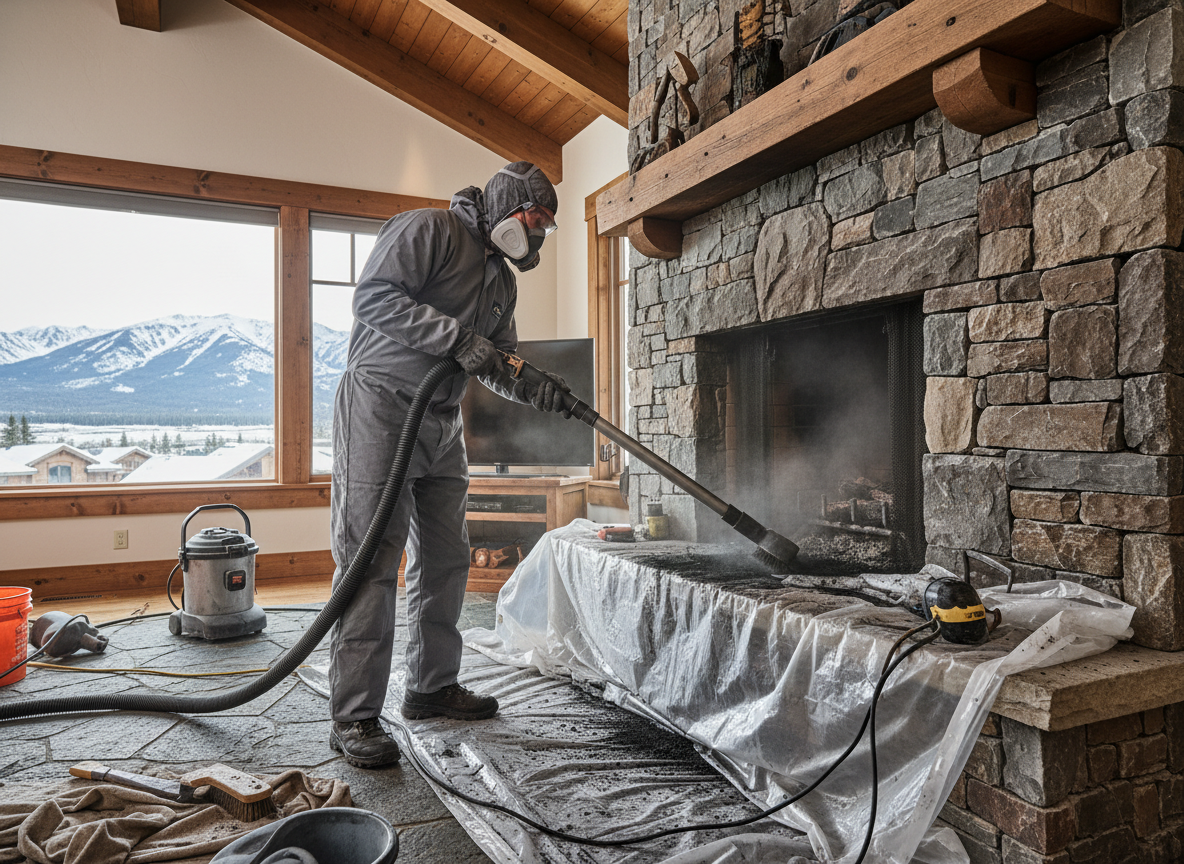
Soot from structure fires in Sun Valley sticks to drywall, wood framing and HVAC ducts because of the area's hot dry summers that keep particles airborne longer. Older housing stock built before 1970 in neighborhoods like Shadow Hills often has textured plaster and popcorn ceilings that trap fine carbon residue, requiring HEPA vacuuming followed by alkaline cleaning solutions to avoid etching. Technicians must test pH levels on each surface because acidic soot from synthetic materials common in Pacoima and Glendale remodels can corrode metal fixtures if left untreated for more than 48 hours.
In La Tuna Canyon properties near Hansen Dam Recreation Area, wind-driven smoke can push soot deep into attic insulation and crawl spaces where humidity from the reservoir area slows natural evaporation. This creates hidden moisture pockets that promote mold if not addressed during the same visit. Standard shop-vac methods fail here; only commercial air scrubbers with activated carbon filters pull the ultrafine particles that settle on Sun Valley Park-adjacent homes after regional fires.
Los Angeles County building codes require documentation of soot migration paths before any drywall removal, especially when fires affect shared walls in multi-unit buildings common along Sunland Boulevard. Skipping this step risks failed inspections and repeated remediation when smoke odor returns during the next Santa Ana wind event.
Technician insight
In Sun Valley the thing that catches most people out with soot removal is how fast the hot dry summers let fine particles travel through single-wall construction into wall cavities. Older homes near Sun Valley Park often have no vapor barriers, so what looks like surface soot on the drywall is actually embedded in the insulation. Skipping the cavity cleaning means the smell returns the first time the heater kicks on.
Soot in 1960s Ranch Attic
A kitchen fire in a Shadow Hills ranch sent smoke through the HVAC and into the attic insulation. Inspection showed acidic soot had settled on fiberglass batts above the bedrooms. Crews removed the contaminated insulation, cleaned the ductwork, and ran air scrubbers for 36 hours until readings cleared. The family returned without odor recurrence during the following dry season.
How it works
- 1
Initial Assessment
Technicians inspect all affected rooms, test surfaces for pH, and map soot migration through HVAC systems in Sun Valley homes.
- 2
Containment Setup
Plastic barriers and negative air machines isolate work zones to prevent cross-contamination to unaffected areas like Shadow Hills garages or La Tuna Canyon attics.
- 3
Dry Removal
HEPA vacuums and sponges lift loose particles from walls, ceilings and contents before any liquid cleaning begins.
- 4
Chemical Cleaning
Alkaline or solvent agents matched to soot type are applied, followed by rinsing and drying with dehumidifiers suited to the warm Mediterranean climate.
- 5
Final Air Scrubbing
Activated carbon filters run until odor readings drop below detectable levels, with clearance testing before reoccupancy.
Pricing
Cost depends on square footage affected, soot type, and whether HVAC systems require cleaning; upfront written estimates provided after inspection.