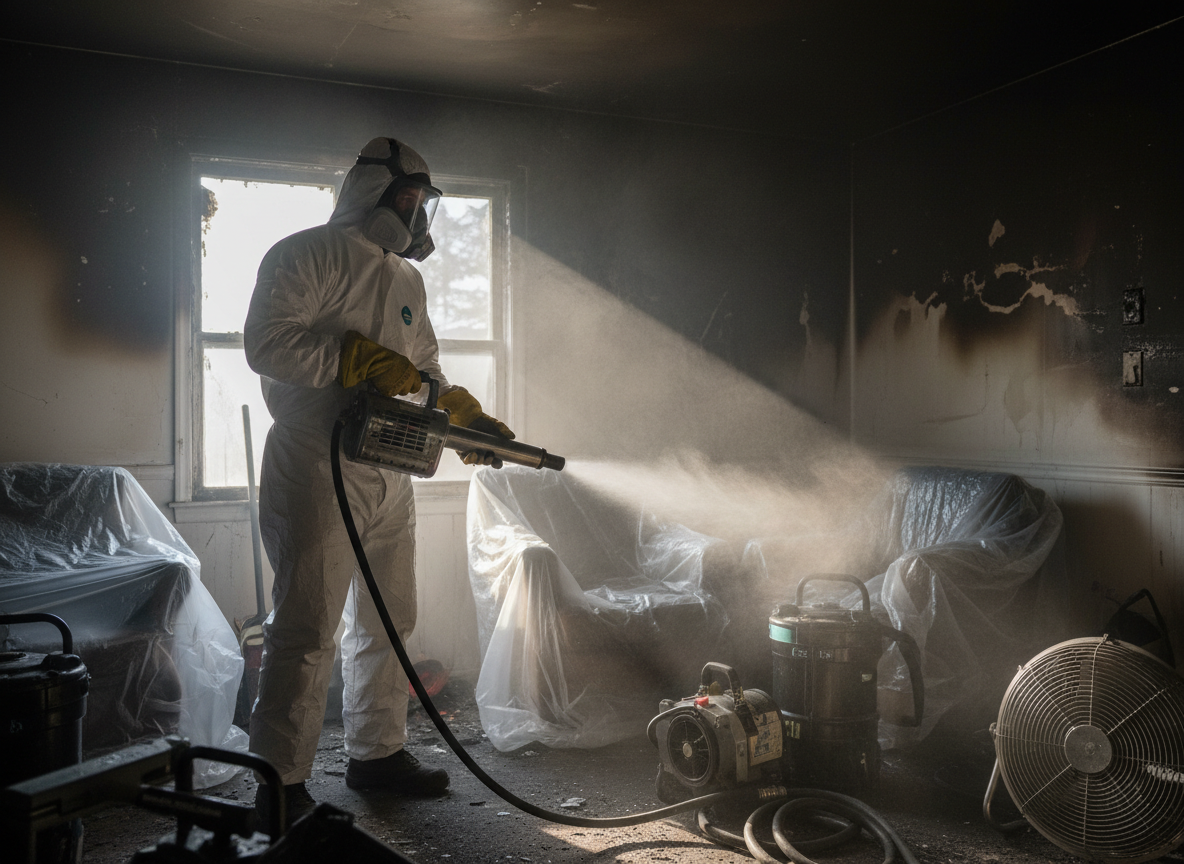
Smoke from structure fires in Sun Valley settles into the porous drywall, insulation and wood framing typical of homes built before 1970 around Sun Valley Park and Hansen Dam Recreation Area. Hot dry summers accelerate off-gassing from these materials, so simple surface cleaning leaves persistent smells that return when temperatures rise. Technicians must map airflow paths through HVAC systems that connect living spaces to attics and crawl spaces common in the area.
Los Angeles County fire codes require removal of all charred debris before odor treatment begins, and failure to do so allows hidden residues to reactivate during the next Santa Ana wind event. Ozone and hydroxyl generators are placed strategically because the flat terrain near Pacoima allows smoke to travel horizontally into neighboring properties. Homeowners in Glendale and Burbank often discover the same issue weeks later when odors migrate through shared walls.
Edge cases include pet dander and cooking oils that bind with smoke particles in kitchens of older Shadow Hills homes, creating stubborn compounds that standard HEPA filtration cannot fully extract. Multiple treatment cycles spaced over several days are usually required because the Mediterranean climate keeps windows closed for long stretches, trapping residual molecules inside.
Technician insight
In Sun Valley the thing that catches most people out with odor removal after fire is how the hot dry summers drive smoke deep into the stucco and older wood framing around Hansen Dam Recreation Area and Sun Valley Park, so one round of treatment rarely finishes the job.
Persistent Smoke in La Tuna Canyon Residence
A kitchen fire left smoke throughout a 1960s wood-frame home. Inspection showed residue had traveled through the HVAC into bedrooms. Multiple hydroxyl treatments over four days cleared the odors that had resisted earlier cleaning attempts.
How it works
- 1
Initial Assessment
Inspect every room, attic and HVAC run for smoke residue depth while noting construction type common to Sun Valley homes.
- 2
Source Removal
Remove charred materials and contaminated insulation per Los Angeles County guidelines before any odor treatment starts.
- 3
Air Scrubbing and Treatment
Deploy hydroxyl generators and activated charcoal filtration to break down smoke molecules throughout the structure.
- 4
Verification
Test air quality and surfaces with olfactory and instrument checks after treatments, repeating cycles until odors are eliminated.
Pricing
Cost depends on square footage, smoke penetration depth and number of treatment cycles needed.