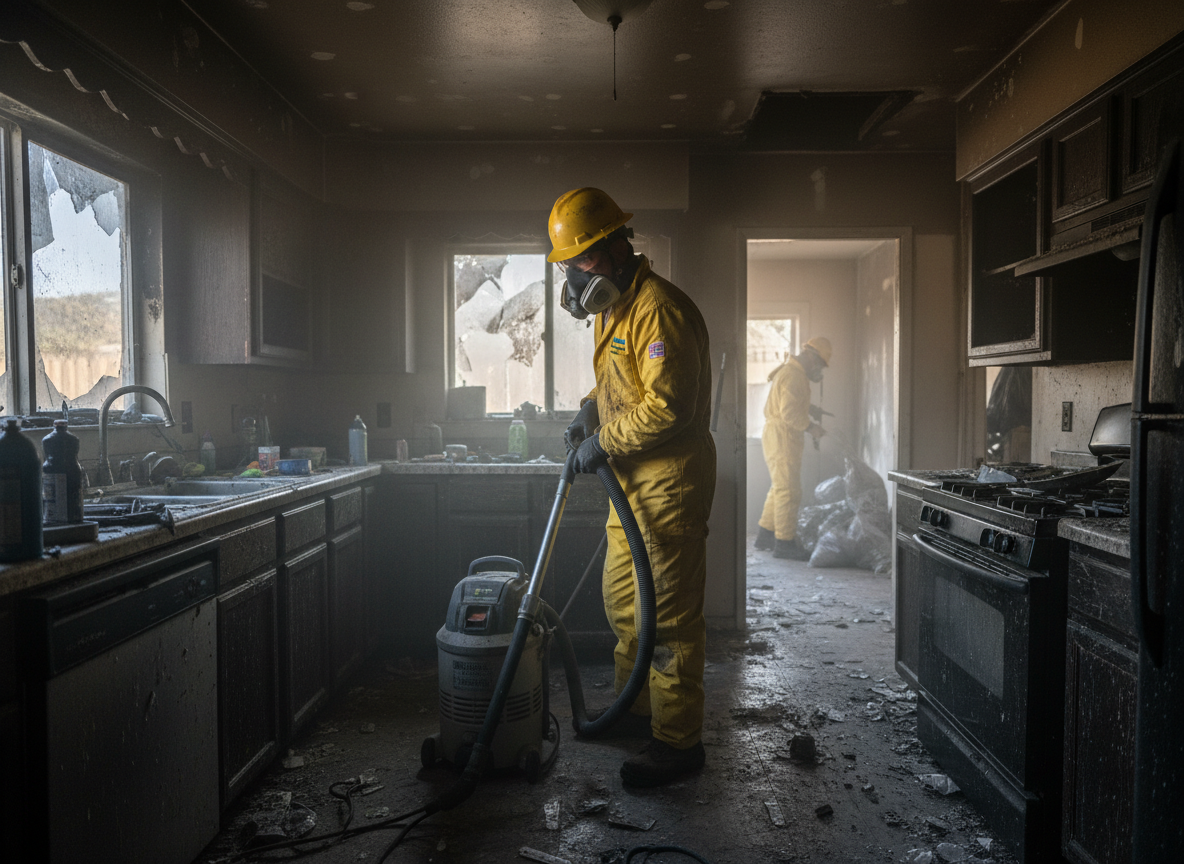
Sun Valley homes built mid-century often feature stucco exteriors and open beam ceilings that trap fine soot particles after even small kitchen or electrical fires. Hot dry summers accelerate smoke penetration into drywall and insulation, requiring HEPA vacuuming followed by chemical neutralization rather than simple wiping. Crews working near Hansen Dam Recreation Area must also manage wind-blown ash that re-contaminates cleaned surfaces within hours if containment tarps are not secured properly against the terrain.
Smoke odor lingers in HVAC systems common in Shadow Hills ranch houses because ducts run through attics that reach extreme temperatures. Restoration teams isolate and clean each register, then treat porous materials with enzyme-based deodorizers before sealing. In La Tuna Canyon properties on sloped lots, water used during suppression can migrate downhill and create secondary mold under flooring, so clean up always includes moisture mapping before any surface work begins.
Los Angeles County building codes require documentation of all removed materials when fire damage affects load-bearing elements, especially in older Pacoima-adjacent neighborhoods. Clean up crews photograph every step and separate non-porous items for off-site cleaning while discarding heavily contaminated carpet and drywall on site to prevent cross-contamination during transport through narrow canyon roads.
Glendale border homes frequently share walls, so clean up must include negative air pressure setups to keep soot from migrating into neighboring units. This adds time but prevents larger claims. After initial removal, surfaces receive a second pass with degreasers formulated for the oily residue left by burning synthetics common in modern furnishings.
Technician insight
In Sun Valley the thing that catches most people out with fire damage clean up is how the hot dry summers drive fine ash deep into the unsealed stucco and attic insulation of 1950s homes near Sunland Blvd, so a single pass never removes the odor that returns the first time the heater kicks on.
Smoke Migration Through Shared Attic Space
A contained kitchen fire in a Shadow Hills duplex sent smoke into the shared attic. Inspection showed soot throughout both units' insulation. Crews isolated the attic, removed contaminated material from both sides, treated the remaining framing, and restored airflow without affecting the neighboring unit.
How it works
- 1
Initial Assessment
Technicians arrive within hours, document visible soot levels, test for hidden smoke in cavities, and note any water introduced during firefighting near Sun Valley Park.
- 2
Containment And Protection
Plastic barriers and negative air machines isolate affected rooms to stop soot spread through the dry, windy conditions typical of summer months.
- 3
Soot And Debris Removal
HEPA vacuums and specialized sponges clean non-porous surfaces; porous materials are removed if saturation exceeds safe cleaning thresholds.
- 4
Odor Neutralization And Final Cleaning
Enzyme treatments and air scrubbers eliminate smoke smell, followed by a final wipe-down and clearance inspection before re-occupancy.
Pricing
Cost depends on square footage affected, depth of soot penetration, and whether HVAC or insulation requires cleaning.