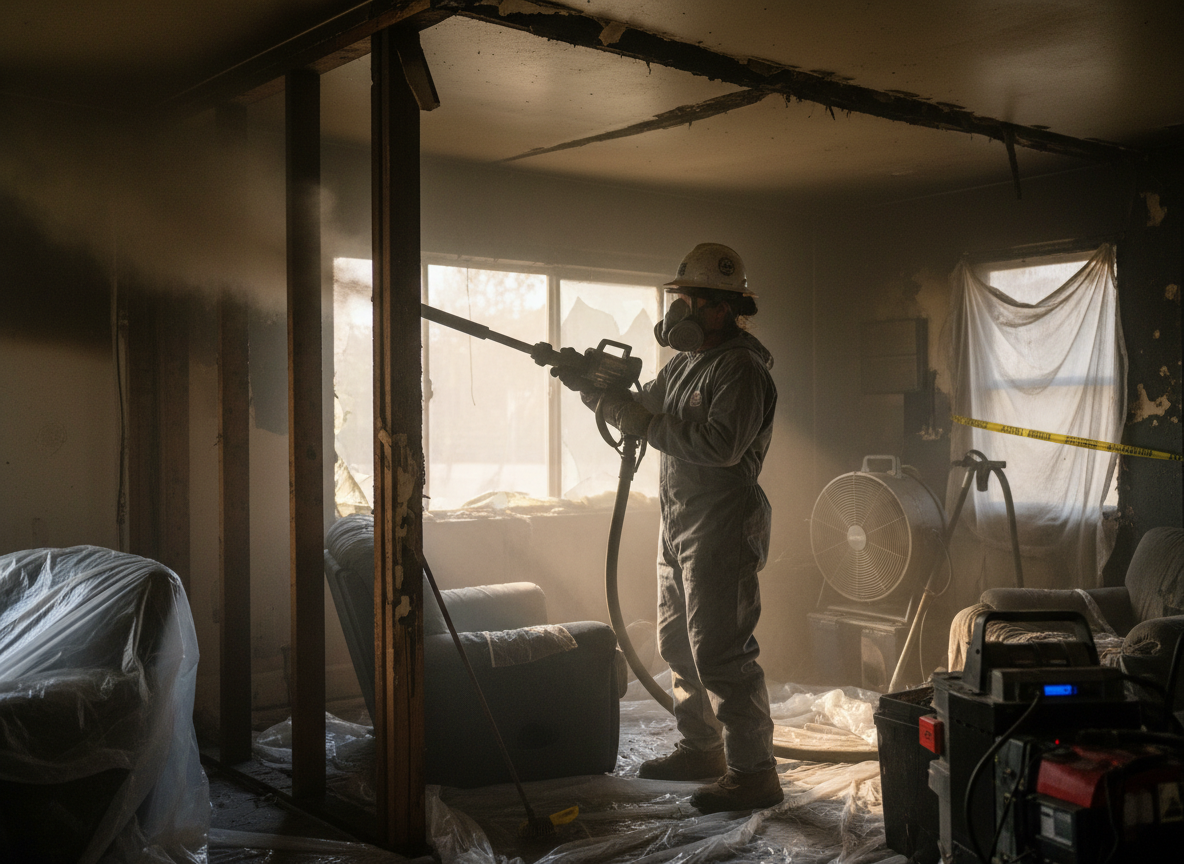
Sun Valley sits in Los Angeles County with a warm Mediterranean climate that brings hot dry summers and elevated fire risk. Many homes in Sun Valley, Shadow Hills, and La Tuna Canyon were built mid-century with wood framing and older electrical systems that can allow fire to travel quickly through attics and wall cavities. Emergency fire damage restoration begins with securing the structure and preventing further water intrusion from suppression efforts, especially important when properties back up against the terrain near Hansen Dam Recreation Area.
Smoke and soot travel differently in these neighborhoods because of prevailing winds and the mix of single-story ranch homes and hillside properties. Residences close to Sun Valley Park or along Sunland Boulevard often have stucco exteriors that trap soot in textured surfaces, requiring specialized cleaning rather than simple wiping. Technicians must also address ash and residue that settles into HVAC systems common in Pacoima and Burbank border homes, where ducts run through crawl spaces that can re-contaminate living areas if not sealed early.
Local regulations in Los Angeles County require proper disposal of fire debris and documentation for insurance claims. Crews working in La Tuna Canyon must account for limited access roads that can delay equipment arrival, so initial containment focuses on tarping roofs and boarding openings to protect against summer wind and occasional rain. The goal is to stabilize the property within hours so secondary damage from humidity or wildlife does not compound the original loss.
Technician insight
In Sun Valley the thing that catches most people out with emergency fire damage restoration is how hot dry summers let soot travel through the open attics common in 1950s-60s wood-frame houses in Shadow Hills and La Tuna Canyon, so what looks like a contained kitchen fire often requires full HVAC cleaning and attic insulation removal before the job is done.
Kitchen Fire Spread Through Attic
A cooking fire in a Sun Valley home near Sun Valley Park sent smoke into the attic and through shared ducts. Inspection showed soot coating insulation and HVAC components. Crews sealed the system, removed affected insulation, cleaned all surfaces, and restored airflow. The home passed clearance testing and was ready for occupancy within five days.
How it works
- 1
Secure and Assess
Board openings, tarps roofs, and document all visible damage on arrival at the Sun Valley address.
- 2
Contain Smoke Migration
Seal HVAC systems and affected rooms to stop soot from spreading into unaffected areas of the home.
- 3
Remove Debris and Residue
Extract charred materials and clean surfaces using methods suited to local stucco and wood construction.
- 4
Restore and Verify
Replace damaged sections, clean remaining surfaces, and confirm air quality before reoccupancy.
Pricing
Upfront written quotes provided after inspection; cost varies with fire size, smoke penetration, and home construction.