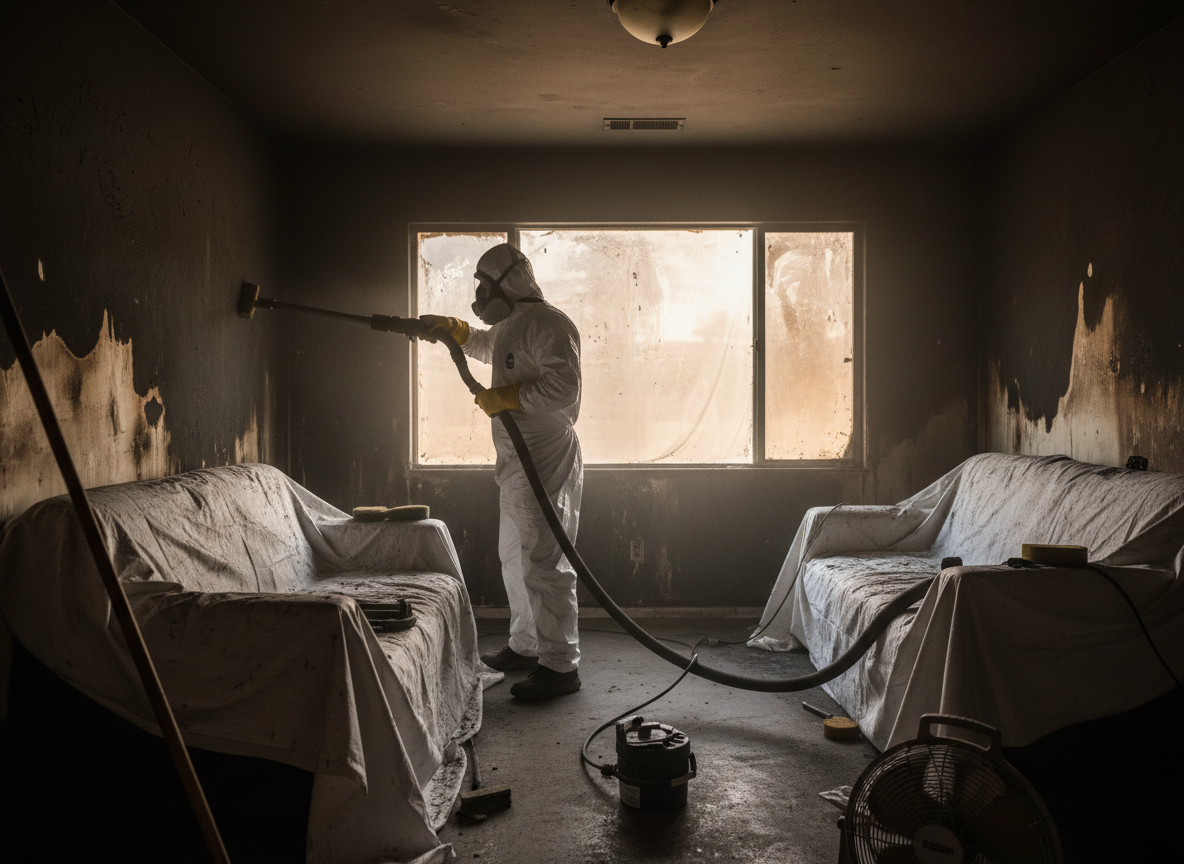
Smoke from structure fires or nearby wildfires travels quickly through the warm, dry air common in Sun Valley summers and settles into the older wood-frame homes found throughout Shadow Hills and La Tuna Canyon. Residue coats drywall, insulation, and HVAC ducts, while acidic soot etches metal fixtures and discolors porous surfaces like plaster and tile. In Los Angeles County, proper disposal of contaminated materials must follow local air quality rules, and incomplete cleaning often leaves odors that return when humidity rises near Hansen Dam.
Technicians begin by mapping smoke migration paths, paying special attention to attics and wall cavities where hot, dry winds push particles deep into building cavities. HEPA vacuuming and specialized sponges remove surface soot without spreading it, followed by thermal fogging or ozone treatments to neutralize embedded odors in carpet pads and cabinetry common in mid-century Sun Valley homes. Nearby Pacoima and Burbank properties often require the same approach because smoke does not respect city boundaries.
Edge cases include smoke that has penetrated electrical boxes or behind built-in cabinetry, situations that surface only after initial cleaning. Crews test pH levels on surfaces before sealing to prevent corrosion, and they document every step for insurance adjusters working in the area. Homeowners near Sun Valley Park frequently discover that ceiling textures trap fine particles that standard wiping misses, requiring multiple passes and air scrubbing before reoccupancy.
Technician insight
In Sun Valley the thing that catches most people out with smoke damage restoration is how the hot dry summer winds drive soot deep into the wall cavities and attic insulation of the older single-story homes near Hansen Dam, so surface cleaning alone never solves the odor problem.
Shadow Hills Home After Nearby Structure Fire
Smoke entered through open windows and the attic vent during a dry summer evening. We found heavy residue on drywall and inside the HVAC trunk line serving the bedrooms. We contained the area, removed contaminated insulation, cleaned all surfaces, and treated the ducts with fogging. The family returned after clearance testing showed no remaining odors.
How it works
- 1
Initial Assessment
Inspect all affected rooms, attics, and HVAC systems to document smoke paths and material damage.
- 2
Containment and Safety
Set up barriers and negative air machines to prevent cross-contamination during cleaning.
- 3
Soot Removal
Use HEPA vacuums, dry sponges, and degreasers on walls, ceilings, and contents.
- 4
Odor Neutralization
Apply thermal fogging or hydroxyl treatments to reach embedded smoke in cavities and fabrics.
- 5
Final Clearance
Test surfaces and air quality before returning the property to normal use.
Pricing
Pricing varies with the square footage involved, depth of smoke penetration into cavities, and number of odor treatments required.