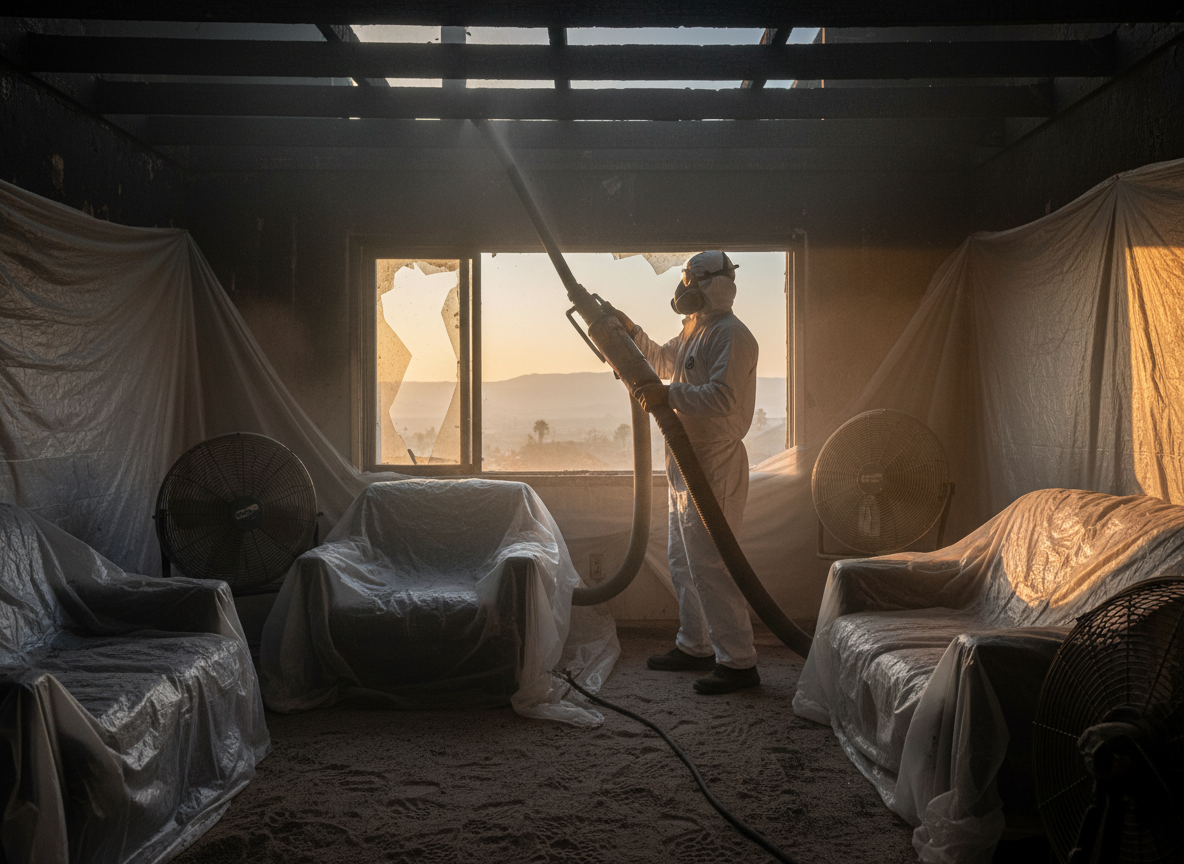
Smoke remediation in Sun Valley requires addressing how the warm Mediterranean climate with hot dry summers drives smoke deep into porous materials like plaster, wood framing, and stucco common in older housing stock near Sun Valley Park and Hansen Dam Recreation Area. Technicians must map airflow paths through single-story ranches and multi-level homes in Shadow Hills where attic spaces and HVAC systems pull particulates into wall cavities. Failure to neutralize alkaline residues from burning synthetics can cause ongoing corrosion on metal fixtures and discoloration on painted surfaces in La Tuna Canyon properties. Proper containment using negative air machines prevents cross-contamination to unaffected rooms during the multi-day cleaning process typical in this terrain.
Edge cases frequently arise in Pacoima and Burbank border homes where older electrical wiring and layered flooring trap smoke odor that standard ozone treatments miss. In these situations crews combine HEPA vacuuming with thermal fogging and hydroxyl generators while monitoring humidity levels that spike during rare coastal moisture intrusions. Los Angeles County building codes require documentation of air quality testing before reoccupancy, especially when smoke has migrated through shared walls in denser neighborhoods. Skipping substrate sealing on concrete slabs or ceiling joists often leads to recurring smells months later once summer heat returns.
Material handling differs sharply between modern drywall and the lath-and-plaster found in many Sun Valley residences built before 1960. Porous surfaces demand multiple passes with specialized detergents followed by encapsulation coatings to lock in remaining odors. Crews also inspect insulation in crawl spaces near Glendale foothills where rodent activity can redistribute soot particles after initial cleaning. Thorough verification includes swab testing and odor panels rather than relying solely on visual inspection to confirm the job meets restoration standards.
Technician insight
In Sun Valley the thing that catches most people out with smoke remediation is how the hot dry summers push soot into the plaster and stucco of 1950s homes near Hansen Dam Recreation Area. Homeowners often try DIY ozone units that only mask the smell until the next heat wave pulls it back out of the walls.
Kitchen Fire Smoke in Shadow Hills Home
Smoke from a kitchen fire traveled through the HVAC of a single-story home in Shadow Hills. Inspection revealed soot inside ceiling cavities and along ductwork. Crews contained the area, performed staged cleaning, and sealed surfaces. The family returned after verification testing showed no residual odors or particulates.
How it works
- 1
Initial Assessment
Technicians inspect all affected rooms, HVAC systems, and hidden cavities in Sun Valley properties to map smoke migration patterns.
- 2
Containment and Air Filtration
Negative pressure zones and HEPA units isolate the work area to stop soot from spreading to unaffected sections of the home.
- 3
Surface Cleaning and Residue Removal
Specialized detergents and tools remove soot from walls, ceilings, and contents while protecting original finishes common in local housing.
- 4
Odor Neutralization
Thermal fogging, hydroxyl treatment, and sealing address embedded odors in porous materials after dry summer conditions have set them.
- 5
Final Verification
Air quality testing and odor checks confirm remediation success before returning the property to the owner.
Pricing
Pricing varies based on the extent of smoke infiltration, number of affected rooms, and whether HVAC systems require cleaning.