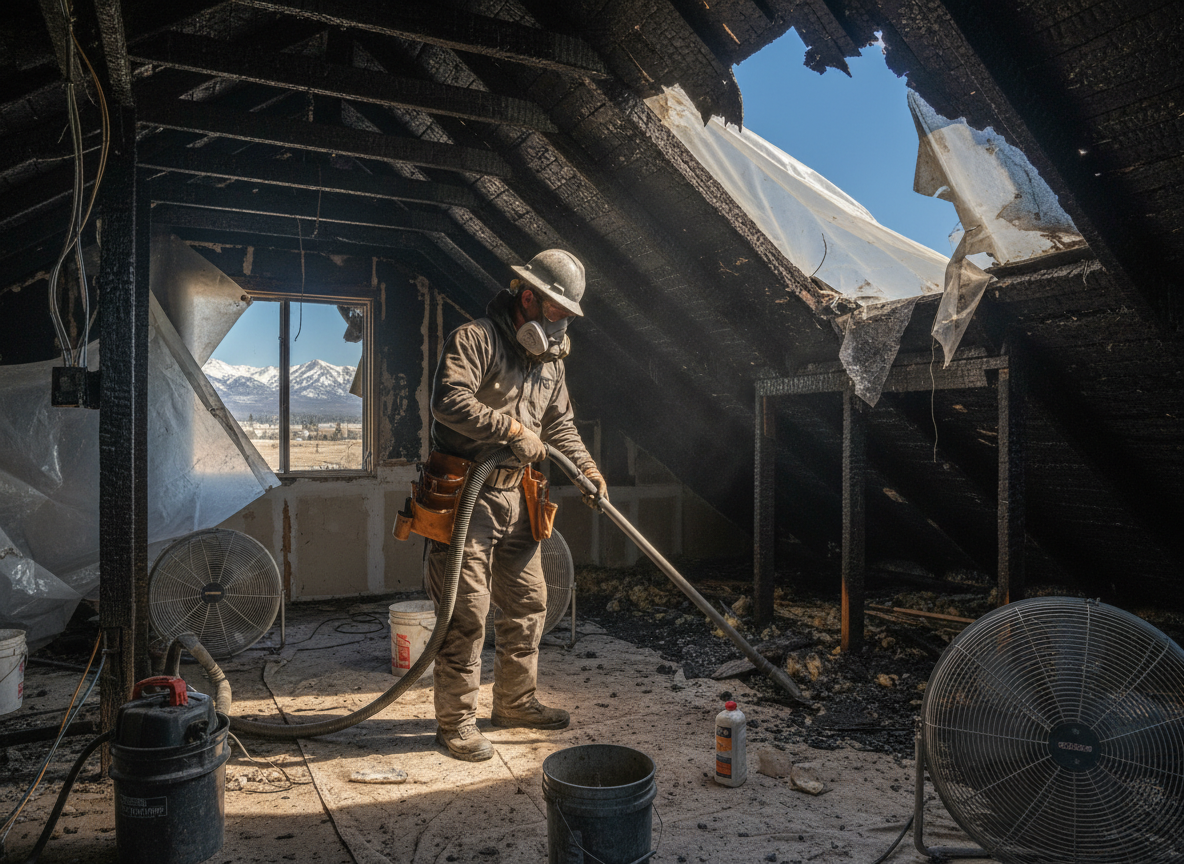
Attic fires in Sun Valley often start from overloaded electrical panels or faulty wiring common in homes built from the 1940s through 1970s. Hot dry summers turn cellulose insulation into a fast path for hidden flames that travel along rafters before reaching living spaces. Crews must pull back drywall ceilings in Shadow Hills and La Tuna Canyon properties to reach ember pockets that standard visual checks miss, then remove charred batts and blown-in material that can re-ignite days later.
Los Angeles County building codes require new insulation to meet current R-value standards after fire damage, which means crews replace older fiberglass or rock-wool layers with fire-retardant material while maintaining proper ventilation around Hansen Dam Recreation Area homes. Soot penetrates roof sheathing and truss plates, so pressure washing alone fails; technicians use specialized alkaline cleaners followed by sealing primers to stop recurring odor migration into bedrooms below.
Access is frequently limited by low-pitch roofs and narrow pull-down stairs typical in Sun Valley Park neighborhoods. Technicians bring negative-air machines early to keep smoke from drifting into Pacoima or Burbank-adjacent properties, and they document every rafter section for insurance adjusters who visit after the initial emergency board-up.
Technician insight
In Sun Valley, the thing that catches most people out with attic fire restoration is how pre-1970 knob-and-tube wiring runs through dry cellulose insulation that smolders for hours during our hot summers, sending smoke into finished ceilings long after the initial flames are out.
Hidden Ember Spread in La Tuna Canyon Attic
A homeowner in La Tuna Canyon noticed a faint burning smell two days after a small kitchen fire. Inspection revealed embers had traveled through shared rafters into the attic. Crews removed the full depth of insulation, cleaned soot from trusses, and installed new fire-retardant material. The space passed clearance testing and the odor did not return.
How it works
- 1
Initial Assessment
Technicians inspect attic access points, test for hidden heat with thermal cameras, and map smoke paths through insulation and rafters.
- 2
Containment and Safety
Plastic barriers and negative air machines isolate the attic while crews remove debris and check for structural weakening.
- 3
Material Removal and Cleaning
Burned insulation, charred wood, and soot-covered sheathing are extracted, followed by alkaline cleaning of remaining surfaces.
- 4
Restoration and Verification
New fire-rated insulation is installed, odors are sealed, and final air-quality checks confirm the space is safe for re-entry.
Pricing
Pricing varies with attic size, depth of insulation removal, and whether rafter charring requires structural sistering.