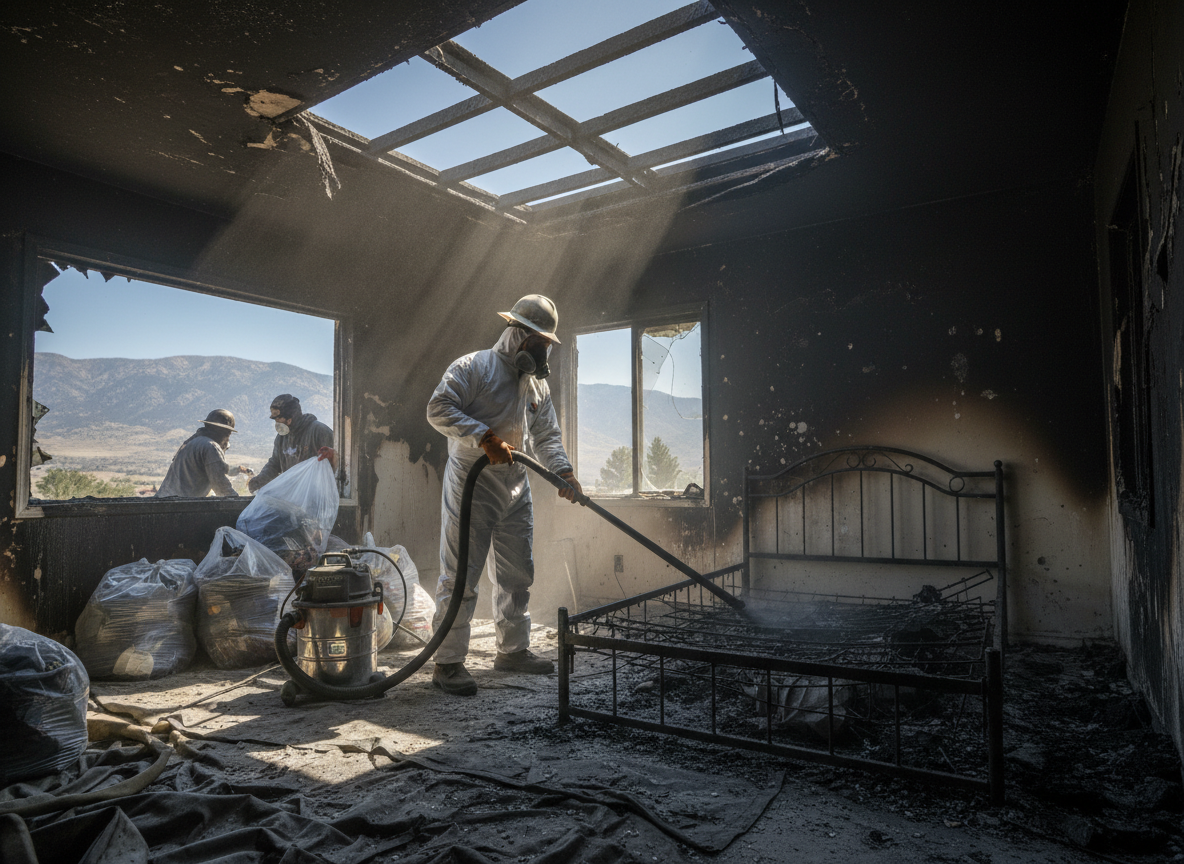
Bedroom fires in Sun Valley often start from overloaded outlets or unattended candles and quickly coat drywall, carpet, and furniture with oily soot that bonds to porous surfaces. The warm Mediterranean climate with hot dry summers accelerates smoke penetration through unsealed attics common in 1950s-1970s homes throughout Shadow Hills and La Tuna Canyon. Technicians must test for hidden char behind baseboards and inside HVAC returns before any cleaning begins, because residual smoke odor travels easily into adjacent rooms when windows stay closed against summer heat.
Cleanup crews isolate the bedroom with plastic sheeting and negative air machines to prevent soot from drifting into hallways or kitchens. In Pacoima and Burbank border homes, older plaster walls can hide moisture from firefighter water lines that later causes mold if not dried within 48 hours. Every fabric item is bagged on site and logged, while hard surfaces receive HEPA vacuuming followed by chemical sponges that lift embedded particles without spreading them into the air.
After initial removal, air scrubbers run for several days while crews monitor humidity levels near Hansen Dam Recreation Area where evening marine layers can slow drying. Final verification includes surface swab tests and odor checks with a trained nose rather than machines alone, because many Sun Valley residents notice lingering smells only after moving back in. This step-by-step approach keeps the rest of the house livable during the project.
Technician insight
In Sun Valley the thing that catches most people out with Bedroom fire damage cleanup is how dry summer winds funnel smoke through the unsealed attic spaces of 1960s wood-frame houses near Sun Valley Park, pushing soot into every bedroom closet even when the door stayed shut.
Smoke Through Shared Attic
A small electrical fire in a Shadow Hills bedroom left heavy soot on one side of the house. Crews found smoke had traveled through the open attic shared with the living room. They sealed the attic, cleaned all surfaces, and ran scrubbers for three days until tests showed no residue remained.
How it works
- 1
Initial Assessment
Technicians inspect the bedroom for structural char, soot depth, and water intrusion while documenting every affected item for insurance.
- 2
Containment And Safety Setup
Plastic barriers and negative air units seal the room to stop soot migration into the rest of the Sun Valley home.
- 3
Soot And Residue Removal
HEPA vacuums, chemical sponges, and specialized cleaners treat walls, ceilings, and flooring without damaging original materials.
- 4
Odor Elimination And Drying
Air scrubbers and dehumidifiers run until humidity drops and no smoke smell remains detectable in closets or under carpet pads.
- 5
Final Verification
Surface testing and walkthrough confirm the space meets pre-loss condition before contents are returned.
Pricing
Cost depends on square footage affected, depth of soot, and whether HVAC systems require cleaning.