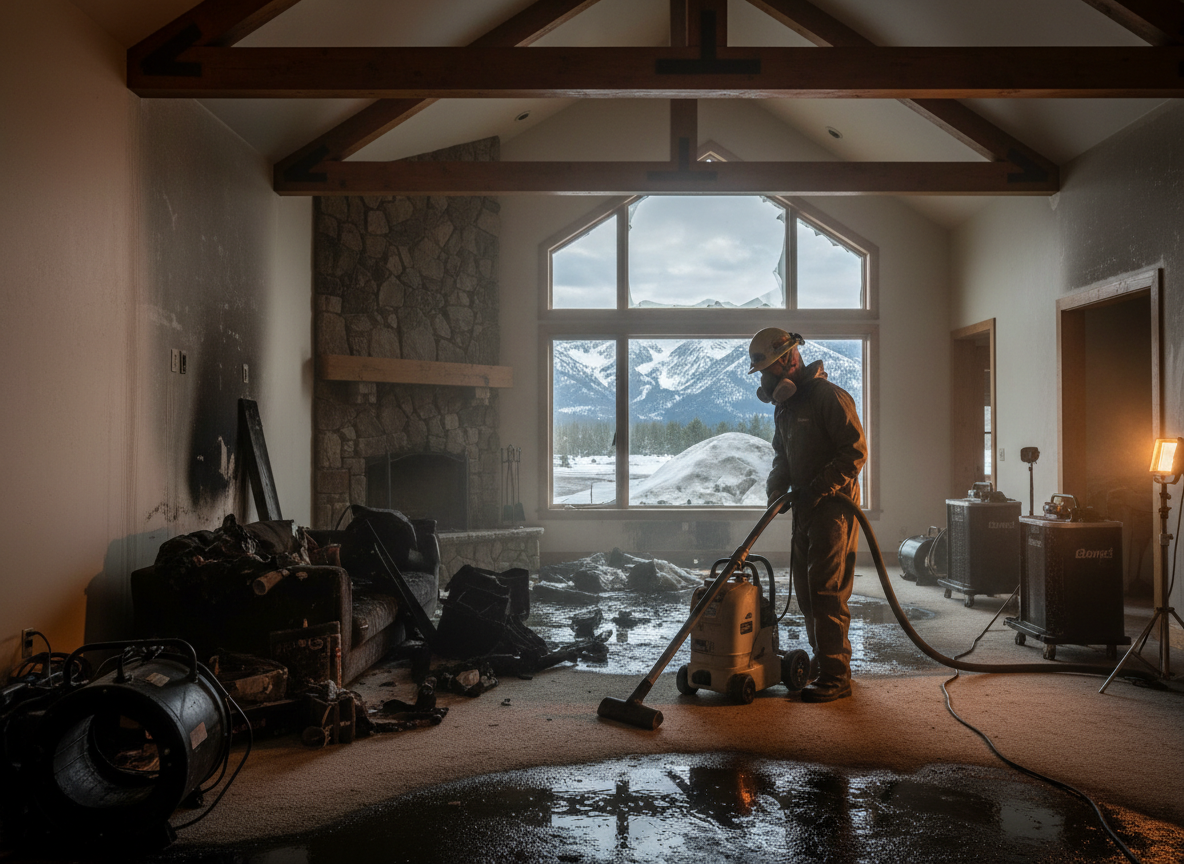
Sun Valley's warm Mediterranean climate brings hot, dry summers that heighten wildfire risk near Hansen Dam Recreation Area and the foothills of Shadow Hills. When embers ignite older single-story homes common in La Tuna Canyon, crews often face both charred framing and subsequent water damage from suppression efforts. The area's mix of 1950s ranch houses and hillside properties means hidden voids in stucco walls and crawl spaces can trap soot and moisture, leading to hidden mold if not addressed before seasonal rains arrive.
Flooding after fires is a frequent complication here because burned slopes above Sun Valley Park shed debris into drainage channels that feed into the Hansen Dam basin. Restoration teams must extract standing water from concrete slab homes while removing smoke residue from HVAC systems that run continuously in summer heat. In Pacoima and Glendale border zones, older ductwork and knob-and-tube wiring complicate drying and cleaning, requiring targeted demolition that avoids disturbing remaining load-bearing elements in post-fire weakened structures.
Los Angeles County building codes require permits for any structural repairs following combined fire and water events, especially when electrical panels or plumbing have been exposed to heat and moisture. Crews document every layer removed to satisfy inspectors and insurance adjusters working properties along Sunland Boulevard. Proper sequencing prevents recontamination: water extraction first, then HEPA air scrubbing, followed by antimicrobial treatment on porous materials that cannot be fully dried within 48 hours in humid post-rain conditions.
Homeowners in Sun Valley often discover that insurance policies treat fire and flood as separate perils, creating coverage gaps when suppression water triggers secondary flooding in basements near the dam. Experienced crews photograph utility shutoffs and pre-existing site grades around properties in La Tuna Canyon to support claims. This documentation protects against disputes when terrain slope directs runoff into living spaces after vegetation loss from nearby fires.
Technician insight
In Sun Valley the thing that catches most people out with fire and flood restoration is how quickly dry summer winds push embers into older wood-frame homes near Hansen Dam, then the first rain sends mud and water into the same voids we just opened for cleaning.
Shadow Hills combined damage call
A structure fire broke out in a 1960s ranch house off La Tuna Canyon Road. Suppression water migrated under the slab and into the garage. We extracted the water, removed saturated subfloor, cleaned soot from ductwork, and dried the home before fall rains arrived.
How it works
- 1
Emergency Assessment
Technicians arrive within hours to document fire patterns, water migration paths, and structural integrity at the Sun Valley address before any demolition begins.
- 2
Water Extraction and Containment
Standing water is removed using truck-mounted pumps suited for the flat lots and hillside properties common around Hansen Dam Recreation Area.
- 3
Soot and Residue Removal
HEPA filtration and specialized cleaning address smoke penetration in older plaster and wood framing typical of Shadow Hills homes.
- 4
Drying and Monitoring
Industrial dehumidifiers and moisture meters track conditions through the hot, dry summer air until materials reach acceptable levels before reconstruction.
- 5
Final Clearance and Repairs
Work passes Los Angeles County inspection and the home is returned with all affected areas addressed.
Pricing
Pricing varies by extent of combined fire and water damage, property age, and access challenges on hillside lots.