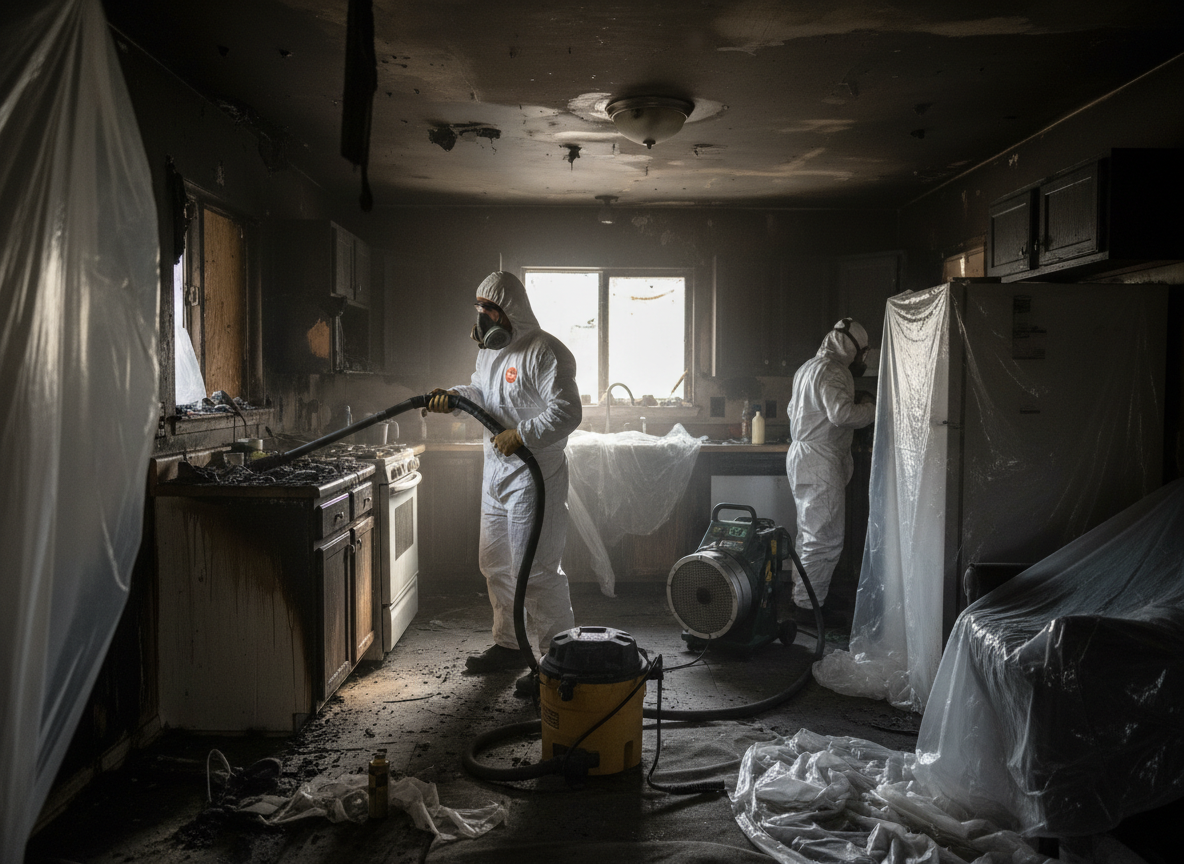
Sun Valley sits in a warm Mediterranean climate where hot, dry summers turn brush and older wood-framed homes into quick fuel. Properties near Hansen Dam Recreation Area and along La Tuna Canyon often see smoke travel far from the original burn site, settling into attics and HVAC systems that were installed decades ago. Restoration crews must pull insulation, clean ductwork, and treat porous materials before odors reappear during the next Santa Ana wind event.
Many single-story ranch houses built in the 1950s and 1960s around Sunland Boulevard still have original plaster and knob-and-tube wiring. Smoke penetrates these cavities and leaves acidic residue that corrodes metal and discolors drywall even after visible soot is gone. Technicians working in Shadow Hills and Pacoima routinely test pH levels on surfaces before sealing, because skipping this step leads to recurring stains once humidity rises in winter.
Los Angeles County building codes require permits for any structural repairs after fire damage. Crews coordinate with local inspectors when replacing charred roof decking or subflooring near Sun Valley Park, where soil movement from the nearby dam area can shift foundations over time. Proper documentation prevents delays when homeowners file insurance claims with carriers familiar with Burbank and Glendale addresses.
Technician insight
In Sun Valley, the thing that catches most people out with fire and smoke damage restoration is how quickly smoke travels through the original attic vents and shared walls of 1950s ranch houses during our hot, dry summers. Homeowners often focus on the burn room and miss the residue that settles behind the HVAC returns near Hansen Dam, which then reactivates when the first winter moisture arrives.
Smoke Migration Through Shared Attic in Shadow Hills
A kitchen fire in a Sun Valley home sent smoke into the attic shared with an attached garage. Inspection showed heavy soot in the ductwork and behind the plaster. Crews removed contaminated insulation, cleaned the HVAC, and treated all cavities before reinstalling new materials to meet county code.
How it works
- 1
Emergency Board-Up
Secure the structure to prevent further weather or vandalism damage while crews assess the fire and smoke spread.
- 2
Smoke and Soot Removal
Clean all affected surfaces, HVAC systems, and contents using specialized equipment suited to dry Mediterranean conditions.
- 3
Odor Neutralization
Apply thermal fogging and ozone treatments to eliminate embedded smoke odors in older plaster and insulation.
- 4
Structural Drying and Repairs
Remove water used during firefighting, dry the property, and complete permitted repairs to Los Angeles County standards.
Pricing
Cost depends on square footage affected, smoke penetration depth, and whether older plaster or HVAC systems require specialized cleaning.