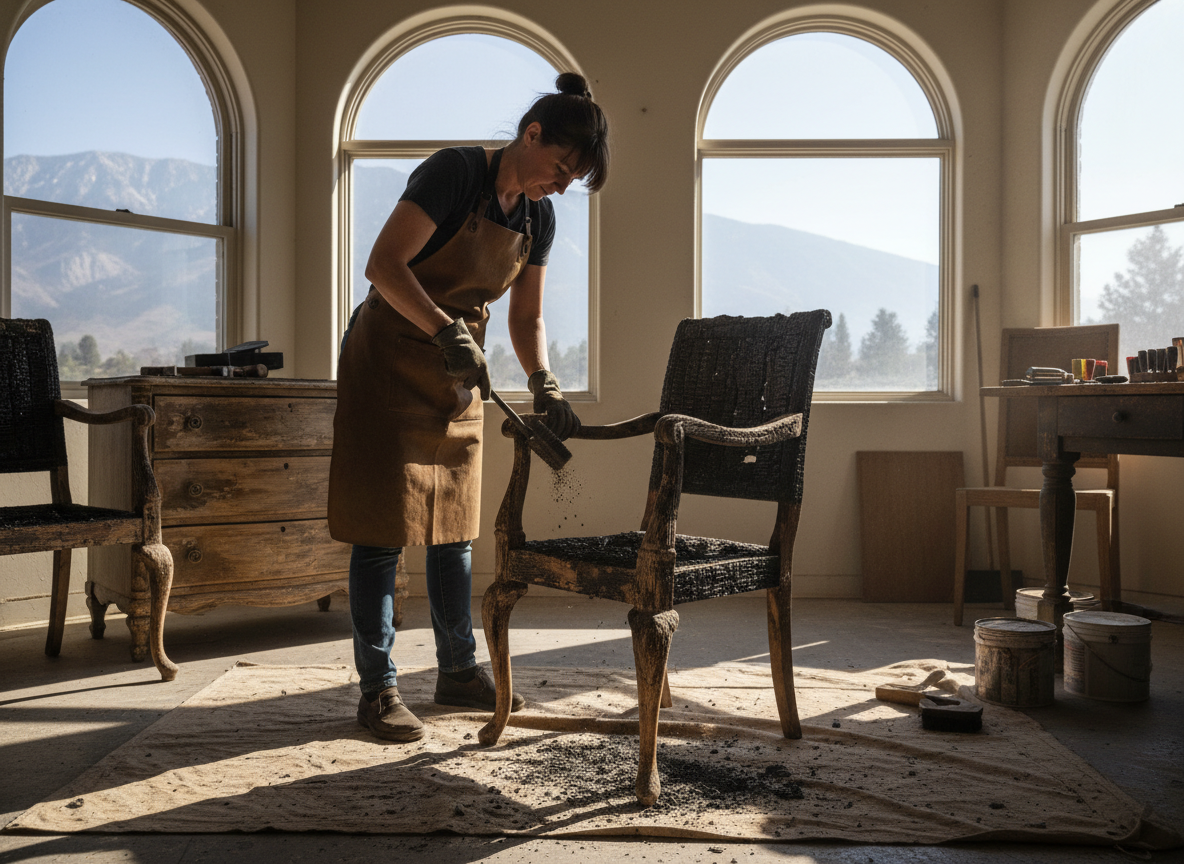
Fire-damaged furniture in Sun Valley homes often involves a mix of older wood pieces and upholstered items common in mid-century housing stock around Sun Valley Park and La Tuna Canyon. Hot dry summers accelerate smoke penetration into porous materials like oak tables and fabric sofas, leaving acidic soot that etches finishes and embeds odors if not addressed within days. Restoration starts with surface testing to determine whether the piece can withstand HEPA vacuuming and specialized solvents without lifting veneers or shrinking leather. Edge cases include pieces stored near Hansen Dam where humidity spikes after initial suppression water use can cause warping in already charred frames.
Technicians working in neighborhoods bordering Burbank and Glendale frequently encounter secondary damage from smoke migrating through open floor plans typical of Pacoima-adjacent properties. Upholstery requires separate chamber treatment to avoid cross-contamination, while metal hardware on dressers may need passivation to stop corrosion from chloride residues in firefighting foam. Regulations in Los Angeles County limit certain solvent use near residential zones, so crews rely on pH-neutral cleaners and controlled ozone application only after confirming ventilation paths. Homeowners sometimes attempt DIY wiping that drives soot deeper into grain, making later professional removal more labor-intensive.
Seasonal patterns matter because dry winds in late summer carry fine particulates farther into Shadow Hills homes, affecting furniture stored in garages or patios. Leather seating demands conditioning after cleaning to restore flexibility lost to heat exposure, and composite board items from newer builds may delaminate if moisture lingers. Final steps include documenting pre-existing wear versus fire effects for insurance purposes and advising on relocation during heavy smoke events to reduce future claims.
Technician insight
In Sun Valley, the thing that catches most people out with fire-damaged furniture restoration is how the hot dry summers let smoke from brush near Hansen Dam seep deep into older wood frames and layered upholstery common in Shadow Hills homes before residents notice the acidic residue etching finishes.
Charred Dining Set from La Tuna Canyon Fire
Smoke from a nearby structure fire entered a single-story home through open windows during a dry summer wind event. We found heavy soot layering inside chair joints and table grain plus lingering odor in the cushions. After chamber cleaning and targeted refinishing the set returned to daily use without odor transfer to the rest of the house.
How it works
- 1
Initial Assessment
Inspect each piece on-site for structural integrity, soot depth, and material type while documenting damage for insurance.
- 2
Soot and Residue Removal
Use HEPA filtration and pH-balanced agents to lift acidic deposits from wood, fabric, and metal without causing further etching.
- 3
Odor Neutralization
Apply targeted hydroxyl or ozone treatments in sealed chambers to break down smoke molecules trapped in padding and finishes.
- 4
Repair and Refinishing
Stabilize cracks, replace damaged hardware, and apply protective coatings matched to original surfaces.
- 5
Final Inspection and Return
Verify odor-free condition and structural stability before returning items to the Sun Valley property.
Pricing
Upfront quotes provided after inspection; cost depends on number of pieces, material types, and extent of smoke penetration.