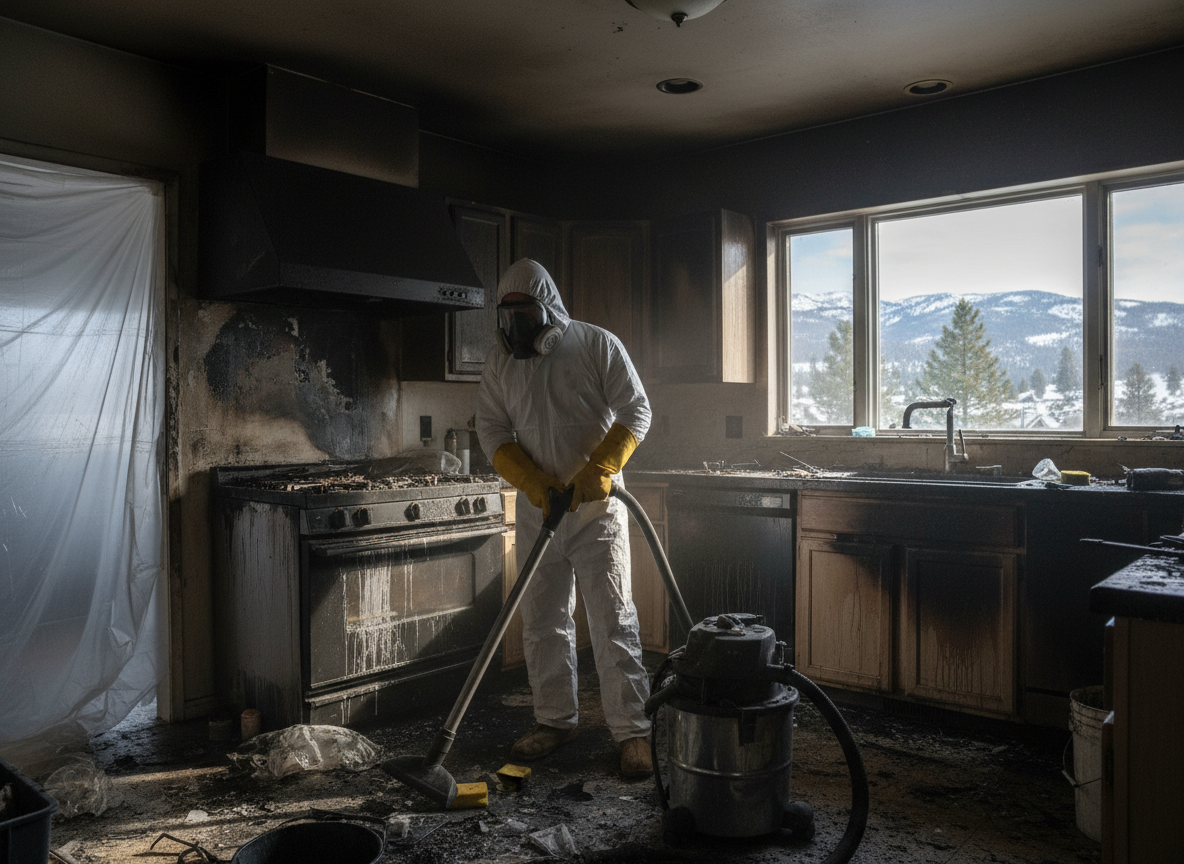
Kitchen fires in Sun Valley often start from grease buildup on older stoves common in 1960s and 1970s tract homes throughout the neighborhood and nearby Pacoima. Hot dry summers accelerate soot adhesion to surfaces like kitchen cabinets and drywall, requiring specialized dry cleaning sponges and HEPA vacuums to avoid pushing particles deeper into porous materials. Technicians must check HVAC registers early because forced-air systems in these single-story homes quickly distribute smoke residue to living areas.
Electrical fires from outdated wiring behind appliances create hidden charring inside walls that only shows after demolition. In La Tuna Canyon properties with hillside lots, terrain limits equipment access so crews often carry supplies by hand to reach affected kitchens. Los Angeles County code requires permits for any wall opening during cleanup, and failure to document hidden damage can delay insurance approval when restoring to pre-loss condition.
Odor neutralization demands thermal fogging after surface cleaning because porous materials like wood trim retain smoke molecules in the warm Mediterranean climate. Crews test pH levels on tile and countertops since alkaline soot from kitchen fires can etch surfaces if left untreated. Homes near Hansen Dam Recreation Area face added dust during exterior venting, so containment barriers stay in place longer than in denser Burbank blocks.
Technician insight
In Sun Valley the thing that catches most people out with Kitchen fire cleanup is how the hot dry summers let fine soot travel through the gaps in older single-wall construction common around Sunland Blvd and into Shadow Hills homes before anyone notices the smell in distant bedrooms.
Grease Fire Smoke Spread in Sun Valley Kitchen
A grease fire on a range top sent smoke through the kitchen and into the hallway of a 1970s home near Sun Valley Park. We found heavy soot inside the return vents and on the underside of upper cabinets. After sealing the HVAC and performing staged dry cleaning plus fogging we restored surfaces without demolition and cleared the property for reoccupancy.
How it works
- 1
Initial Assessment
Inspect kitchen surfaces, HVAC paths, and adjacent rooms for visible soot and hidden smoke migration using moisture meters and borescopes.
- 2
Containment Setup
Seal doorways and vents with plastic sheeting and negative air machines to prevent cross-contamination into living spaces.
- 3
Soot Removal
Apply dry sponging on walls and ceilings followed by HEPA vacuuming of cabinets, appliances, and flooring.
- 4
Deep Cleaning and Odor Treatment
Clean hard surfaces with appropriate pH solutions, then use fogging equipment to neutralize embedded smoke odors.
- 5
Final Inspection
Verify clearance with air quality checks and walkthrough before returning the space to the homeowner.
Pricing
Pricing varies with fire size, soot penetration depth, and whether HVAC cleaning or wall access is required.