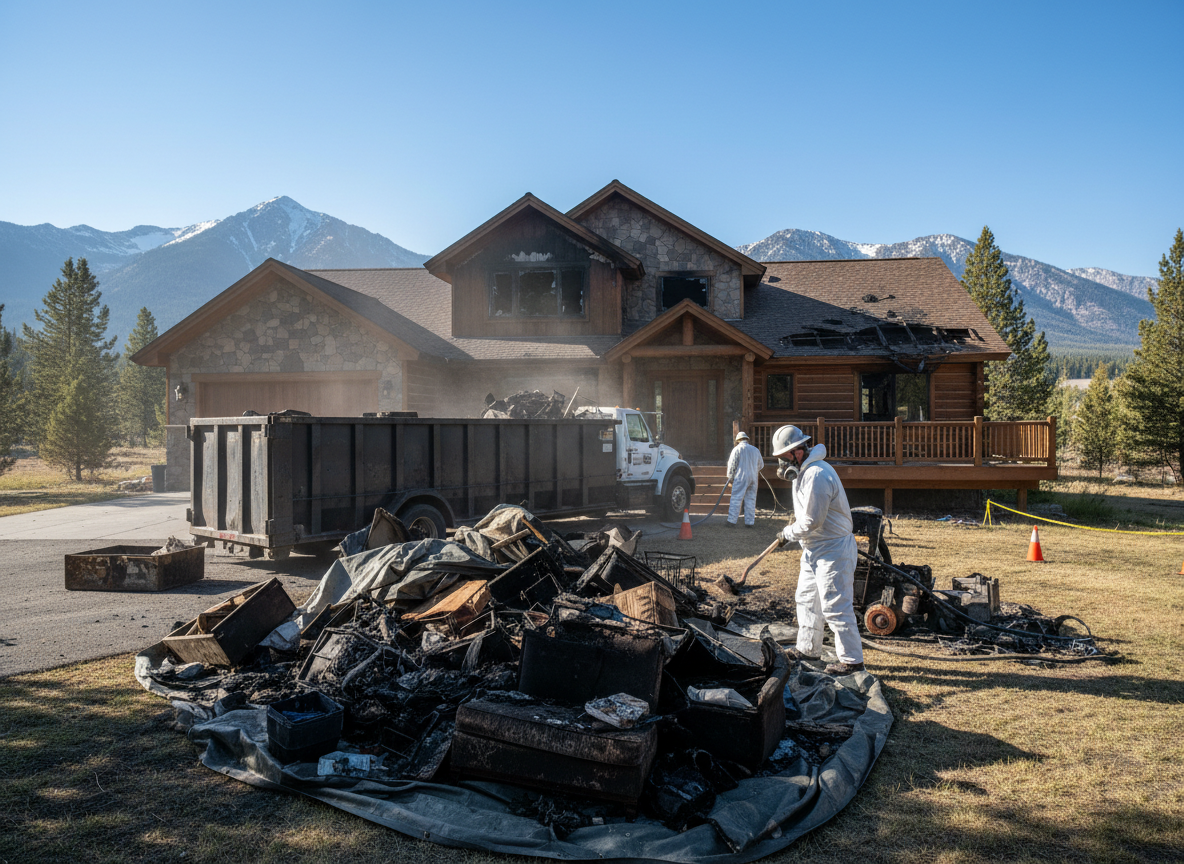
Tenant fire damage cleanup in Sun Valley often involves older single-family rentals and small apartment buildings built from the 1940s through the 1970s that contain lath-and-plaster walls, knob-and-tube wiring remnants, and layered flooring. Hot, dry summers increase soot adhesion on these porous surfaces, making dry-ice blasting and HEPA air scrubbing necessary before any repainting. Crews must coordinate with landlords and tenant insurance carriers while documenting every item removed to protect security-deposit claims.
Smoke migration through shared attics and HVAC ducts is common in Shadow Hills and La Tuna Canyon hillside homes, where prevailing winds push particulates into neighboring units. Restoration teams isolate HVAC systems early, then use thermal fogging followed by antimicrobial rinses on ductwork to prevent odor re-entrainment once the dry Mediterranean winds return. Tenants frequently underestimate hidden contamination in cabinet interiors and under sinks, so every drawer and void is inspected with borescopes.
Los Angeles County code requires removal of all charred structural members before re-occupancy; crews therefore photograph each cut and obtain landlord sign-off before closing walls. Contents cleaning separates salvageable textiles and electronics from porous items like mattresses that absorb smoke odors permanently. Final clearance testing includes both visual inspection and air sampling to satisfy both property managers and incoming tenants.
Technician insight
In Sun Valley the thing that catches most people out with tenant fire damage cleanup is how quickly smoke travels through the shared attic spaces of 1950s and 1960s homes near Sun Valley Park; one kitchen fire can coat three neighboring rentals before the dry summer winds shift.
Kitchen fire in a Sun Valley rental
A cooking fire in a 1962 single-family rental near Hansen Dam Recreation Area sent heavy smoke through the attic into two bedrooms. We isolated the HVAC, removed all cabinetry, and cleaned the lath-and-plaster walls with dry-ice blasting. After air sampling cleared the unit, the tenant was able to move back in within nine days.
How it works
- 1
Secure And Assess
Board openings, document the scene with photos, and test for structural safety before any cleaning begins.
- 2
Isolate And Ventilate
Seal HVAC systems, set up negative air machines, and begin odor neutralization to stop smoke migration into unaffected units.
- 3
Contents And Surface Cleaning
Pack out tenant belongings for off-site cleaning, then perform dry cleaning, wet cleaning, and HEPA vacuuming on all surfaces.
- 4
Final Clearance
Conduct visual inspection, air sampling, and obtain landlord approval before returning keys to the tenant.
Pricing
Pricing depends on square footage affected, number of rooms requiring contents cleaning, and whether HVAC systems need full decontamination.