2026-10-17 ·
Removing Smoke Residue from Sun Valley Kitchens After Small Fires
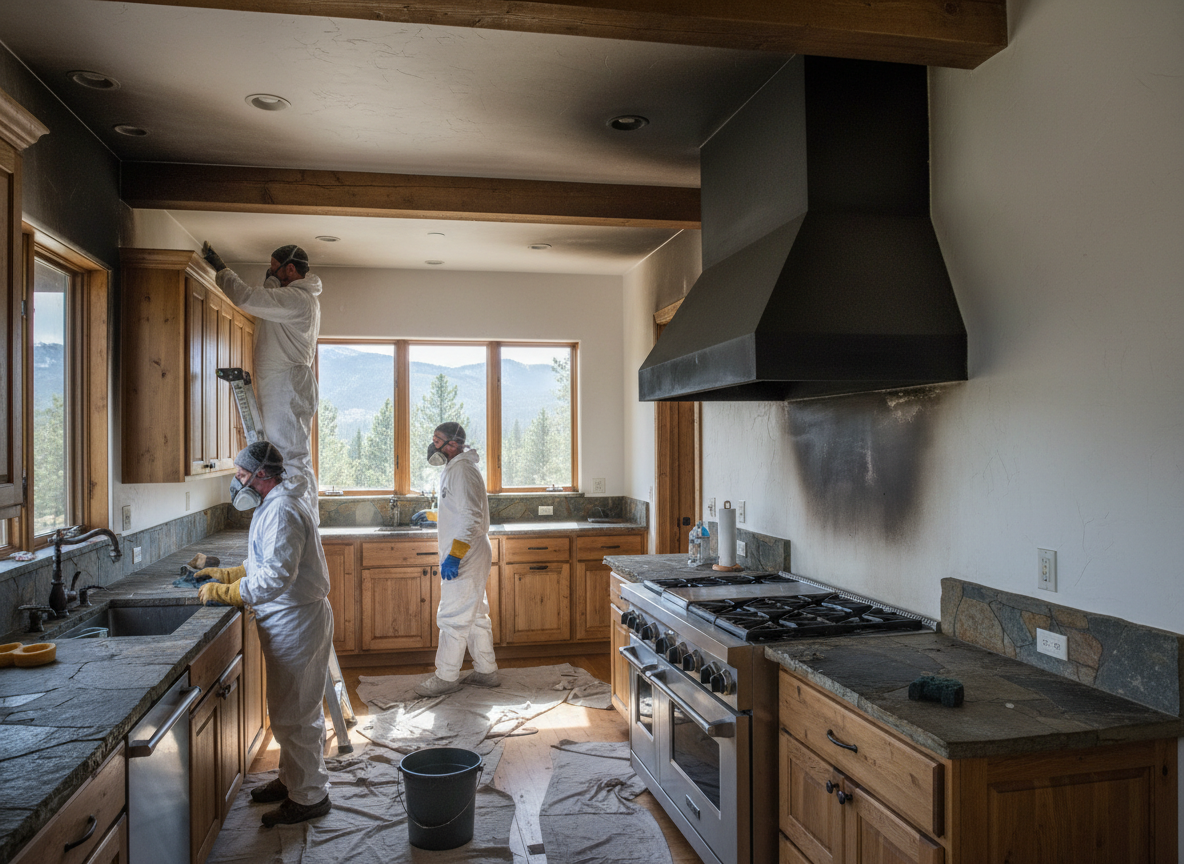
Small kitchen fires in Sun Valley leave behind a thin, oily smoke film that settles on range hoods, cabinet faces, and tile backsplashes within hours. The warm Mediterranean climate with hot, dry summers accelerates this bonding because low humidity lets the residue dry and harden faster than in coastal zones. Homeowners can remove most of this film using a staged approach that starts with dry removal, moves to pH-neutral cleaners, and finishes with ventilation checks before odors set in.
Assessing Residue Types in Local Kitchens
Sun Valley homes built between the 1950s and 1970s feature painted wood cabinets and laminate countertops that trap smoke differently than newer materials. Residue from a small grease fire appears as a yellowish film on upper cabinets near the range, while electrical shorts produce a darker, powdery soot on outlets and appliances. Walk through the kitchen with a bright flashlight held at an angle to spot the haze on surfaces that face the cooking area. Note any residue inside range hood filters or on the underside of microwave vents, both common collection points in these older layouts.
Dry Removal Before Wet Cleaning
Begin with a HEPA vacuum or microfiber cloth to lift loose particles without smearing them into porous surfaces. Work from ceiling to floor so dislodged material does not resettle on already cleaned areas. In La Tuna Canyon and Shadow Hills homes, where kitchens often open directly to living spaces, close off adjacent rooms with plastic sheeting to keep particles contained. This step typically takes 30 to 45 minutes in a standard Sun Valley kitchen and prevents the fine soot from becoming airborne again during later wiping.
Surface-Specific Cleaning Sequences
For painted cabinets, mix a mild degreaser with warm water and wipe in the direction of the wood grain using a soft sponge. Test the solution on an inconspicuous spot first, because older enamel finishes in Pacoima and Burbank homes can soften under aggressive solvents. Stainless appliances respond well to a 1:1 vinegar-water solution followed by a dry buff, while tile grout requires a nylon brush to reach into the porous lines where smoke settles. Repeat the process on the range hood interior and filter housing, areas that retain odor longer due to accumulated grease layers.
Ventilation and Odor Control Steps
After visible residue is gone, run exhaust fans and open windows on opposite sides of the house to create cross-flow, especially during the dry summer months when outdoor air is less humid. Replace or clean range hood filters immediately, as trapped particles continue to release smell. If the odor lingers after two days, it has usually migrated into drywall or insulation above the cabinets, a common issue in Sun Valley homes near Hansen Dam where older construction leaves small gaps. Soot removal techniques become necessary at that point to reach hidden layers.
Knowing When Professional Help Is Required
Persistent yellowing on cabinet interiors or a sharp chemical smell after cleaning indicates that smoke has penetrated beyond surface layers. In these cases, kitchen fire cleanup specialists use thermal fogging and air scrubbers sized for the 1,200 to 1,800 square foot homes typical in the neighborhood. Homeowners who also notice water stains on ceilings should review the related guide on hidden water damage after fire suppression before attempting further DIY work. The address at 8947 Sunland Blvd remains available around the clock for assessments when residue returns after initial cleaning efforts.